The Business Case for an LLM Gateway
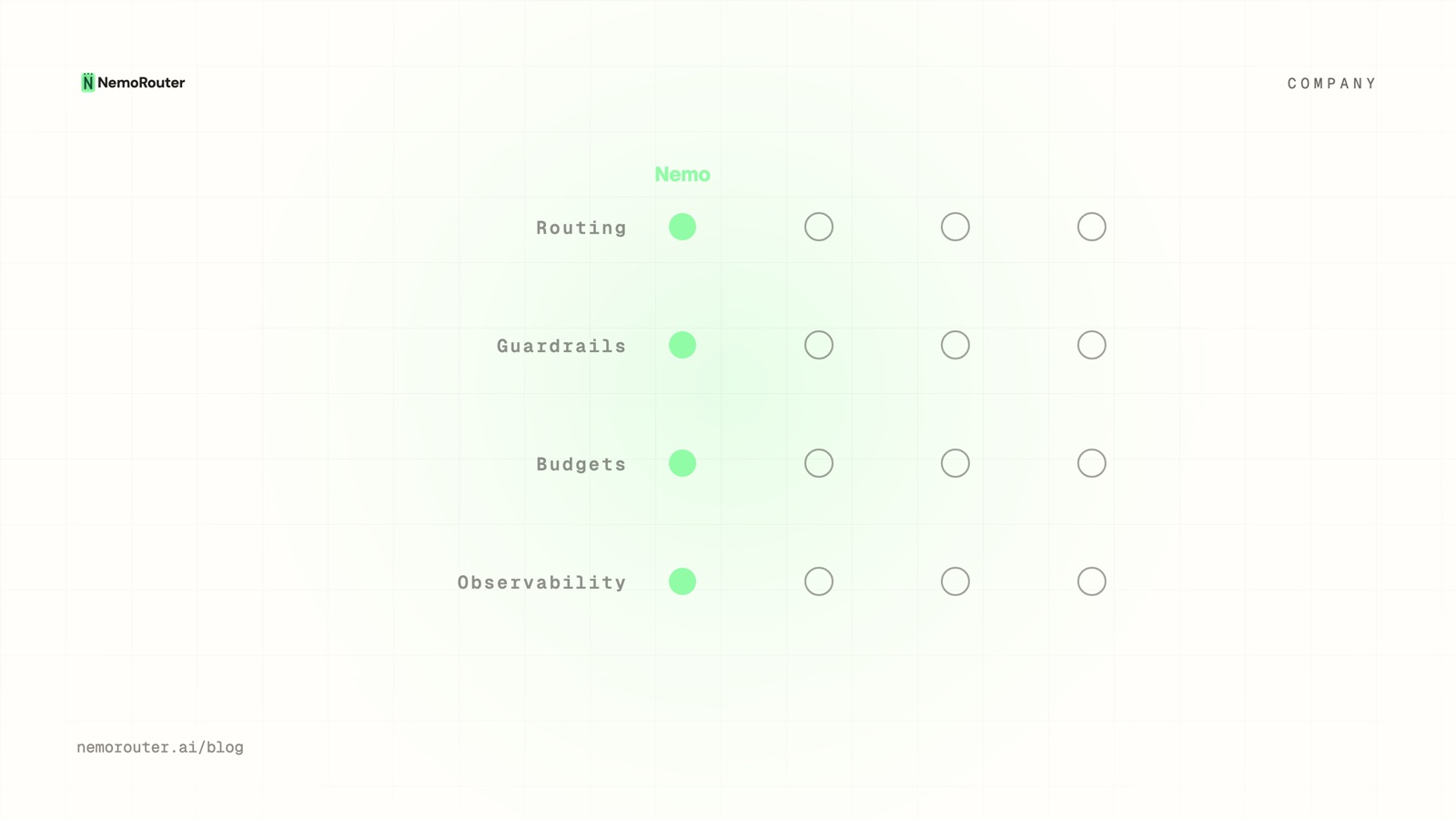
Most AI-gateway pages list features. The buying decision is about four outcomes — save money, reduce AI costs, better performance, faster deployment. Here is how to build the internal case around each one.

Most AI-gateway pages list features. The buying decision is about four outcomes — save money, reduce AI costs, better performance, faster deployment. Here is how to build the internal case around each one.

Set a hard dollar ceiling per key, team, and org. A runaway agent or a traffic spike can never turn into a surprise bill — requests stop at the limit, not after the money is gone.

Go from signup to a production-ready AI call in minutes, then add models and providers without new integrations. Here is how NemoRouter cuts your AI time-to-market from weeks to an afternoon.

Send every LLM call to the fastest healthy provider and fail over automatically — lower tail latency and fewer outages, with no manual failover code to maintain.

Point one OpenAI-compatible key at NemoRouter and your spend drops — requests route to the cheapest model that still clears your quality bar. No app rewrite.

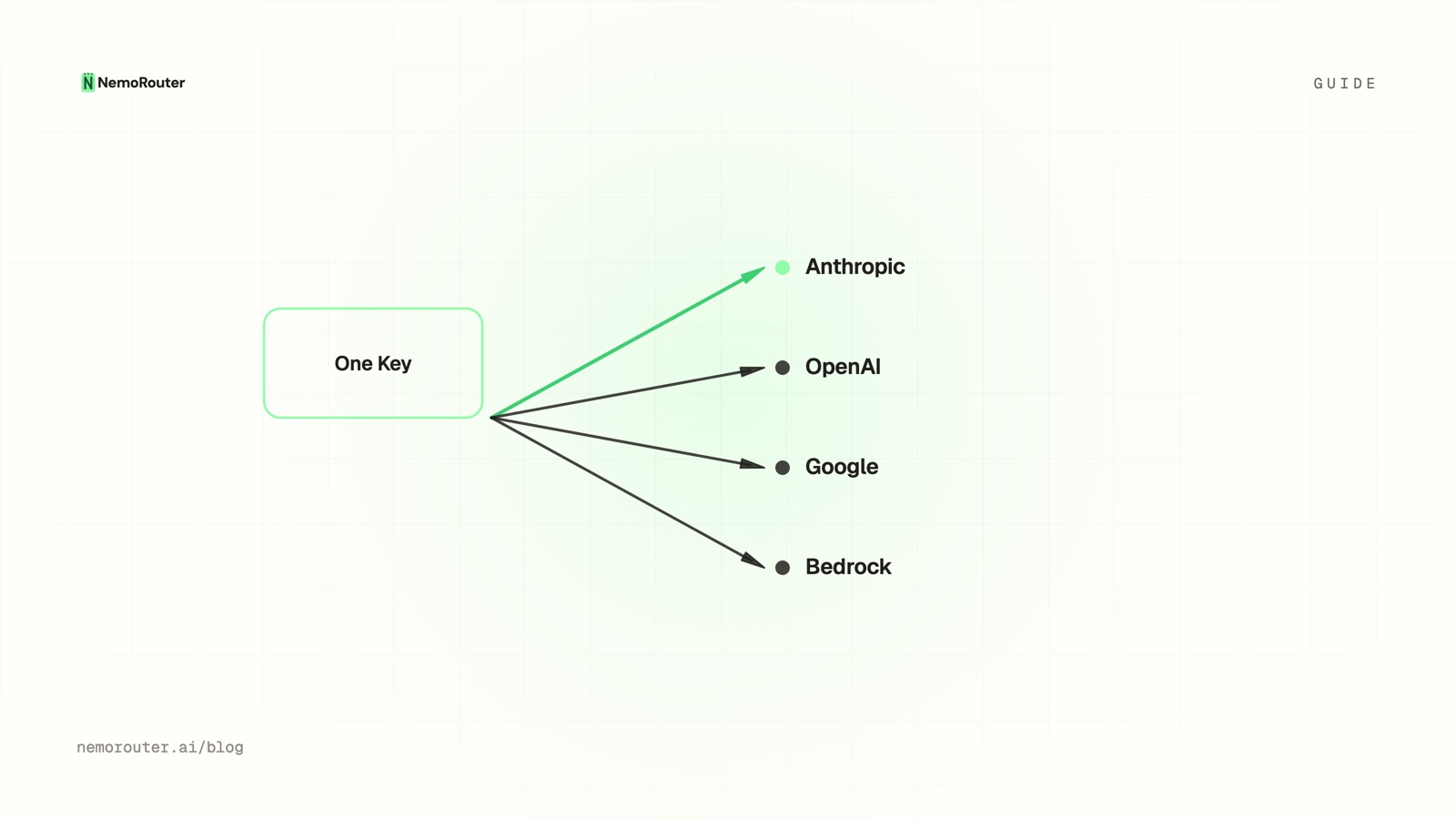
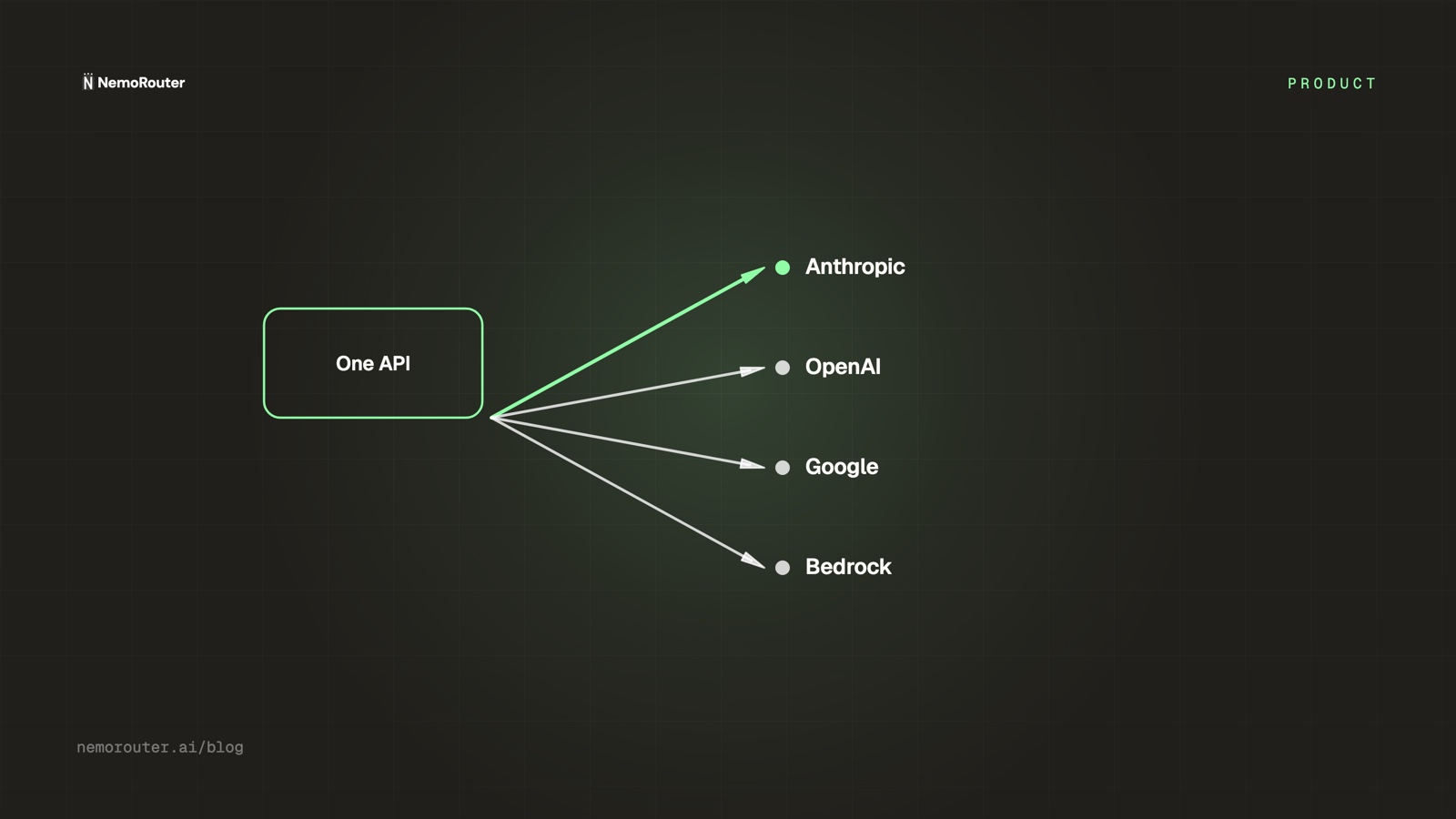
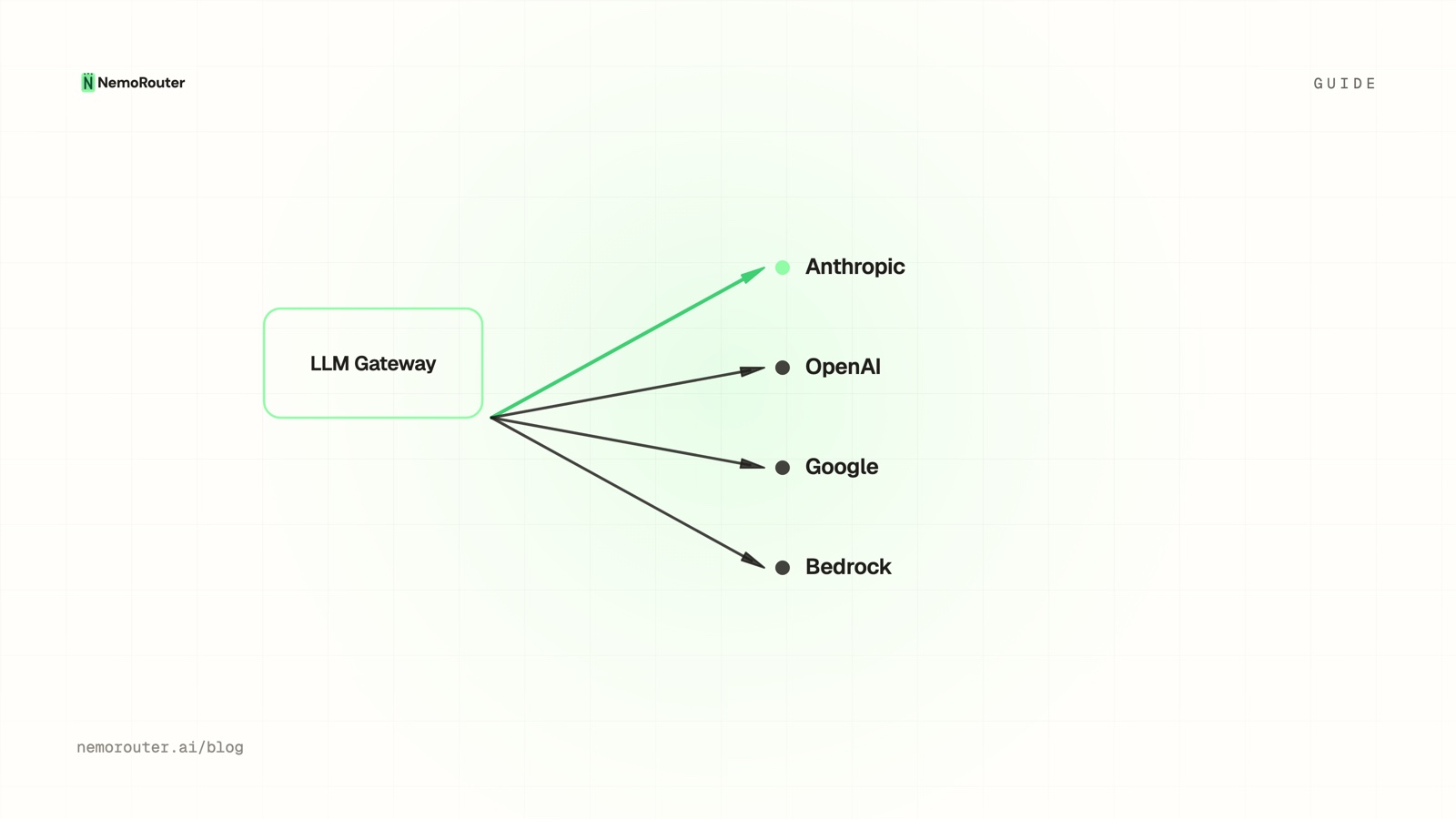
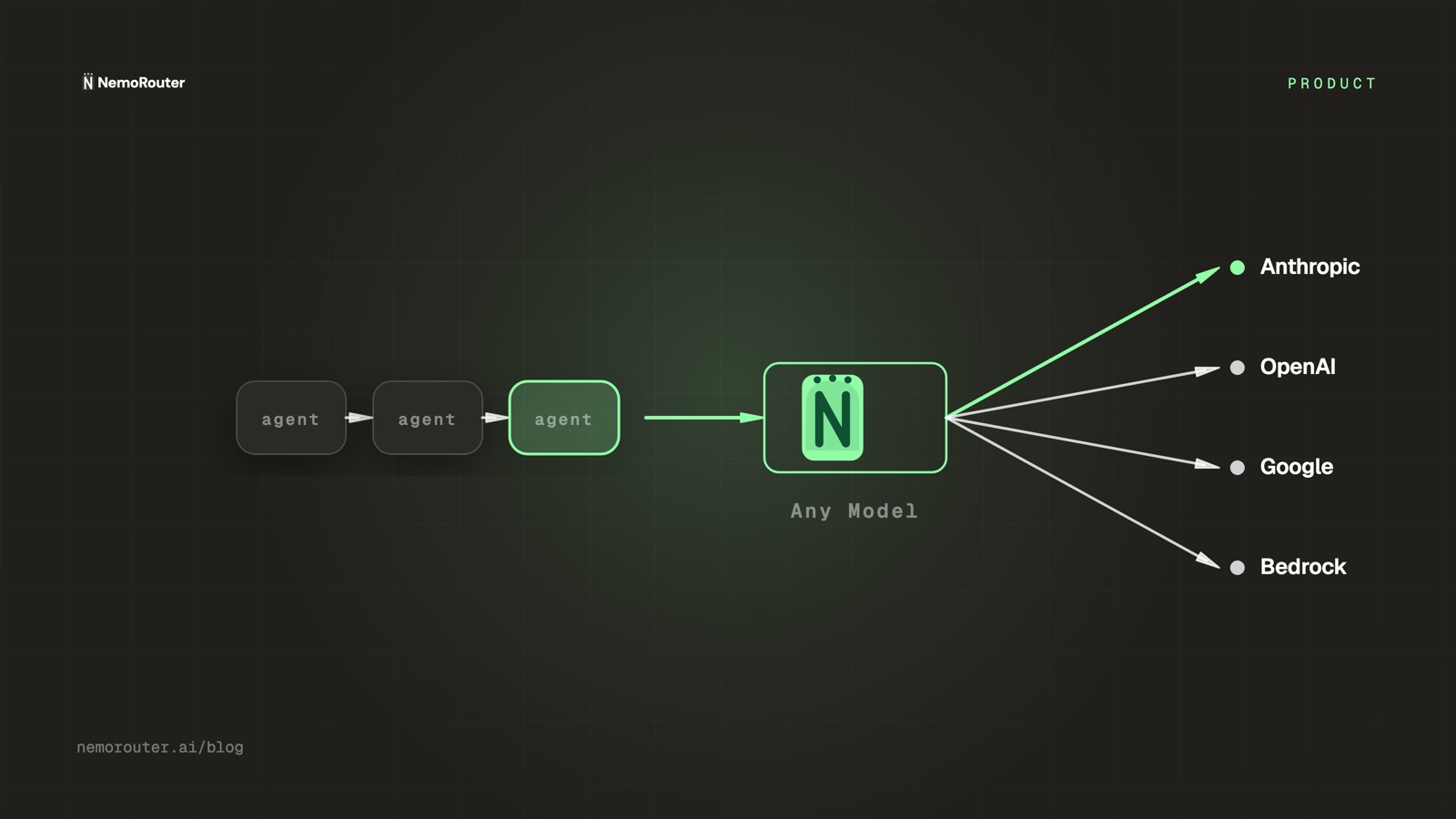
One OpenAI-compatible key unlocks 78+ models across Anthropic, Google, and OpenAI — with AWS Bedrock shipping next. Swap models by changing one string, no per-provider SDKs or keys.

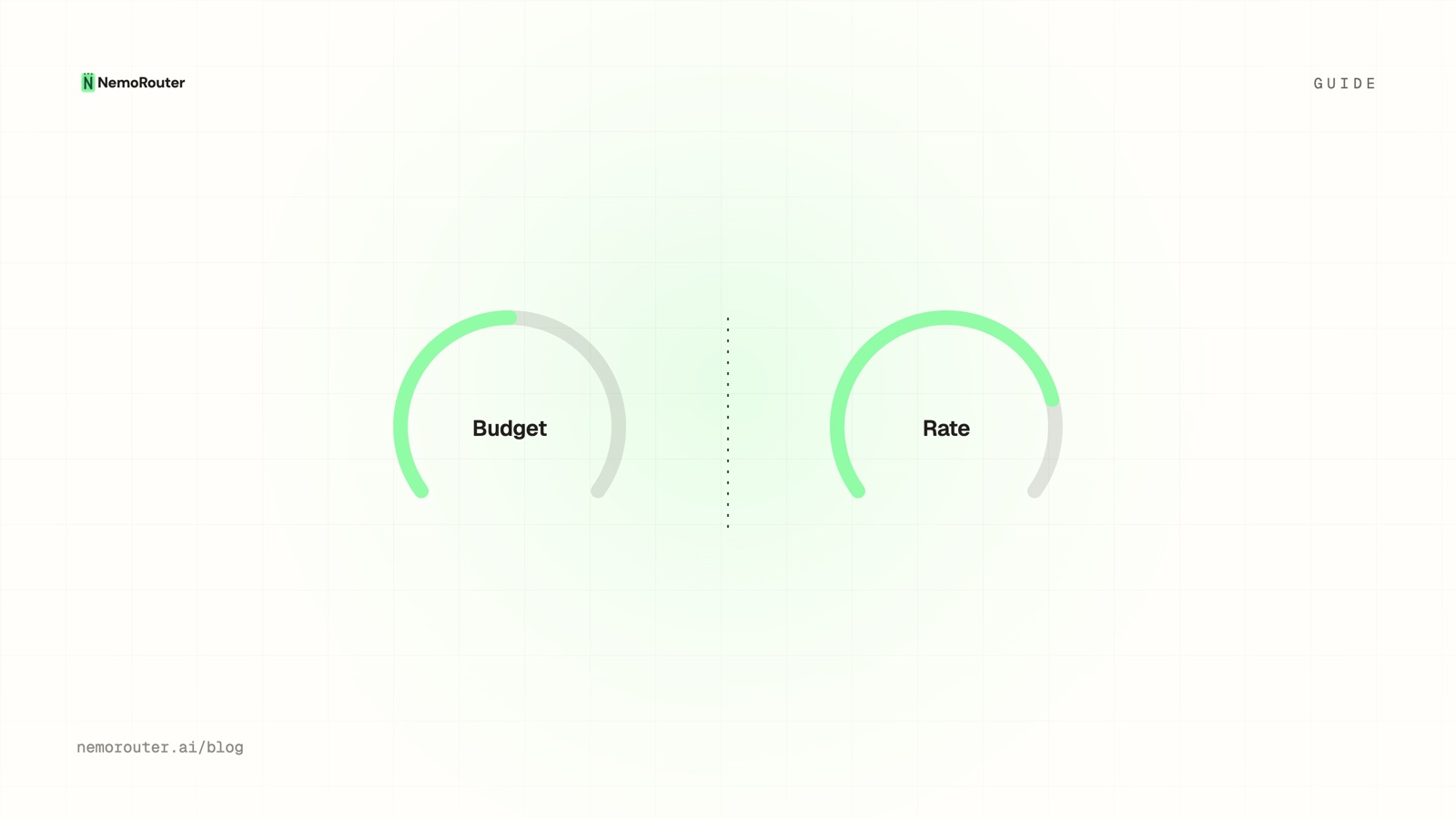
Both return 429, but they solve different problems. Here is a decision guide for when to use a budget cap, when to use a rate limit, and why you almost always want both.

Request logs are your debugger and your liability at once. Here is a practical policy for LLM logging — what to capture, what to redact, how long to keep it, and the four logging levels to choose from.

Provider prepaid tokens lock you to one model''s pricing. Gateway credits are model-agnostic dollars. Here is how the two differ and why credits fit a multi-model world better.

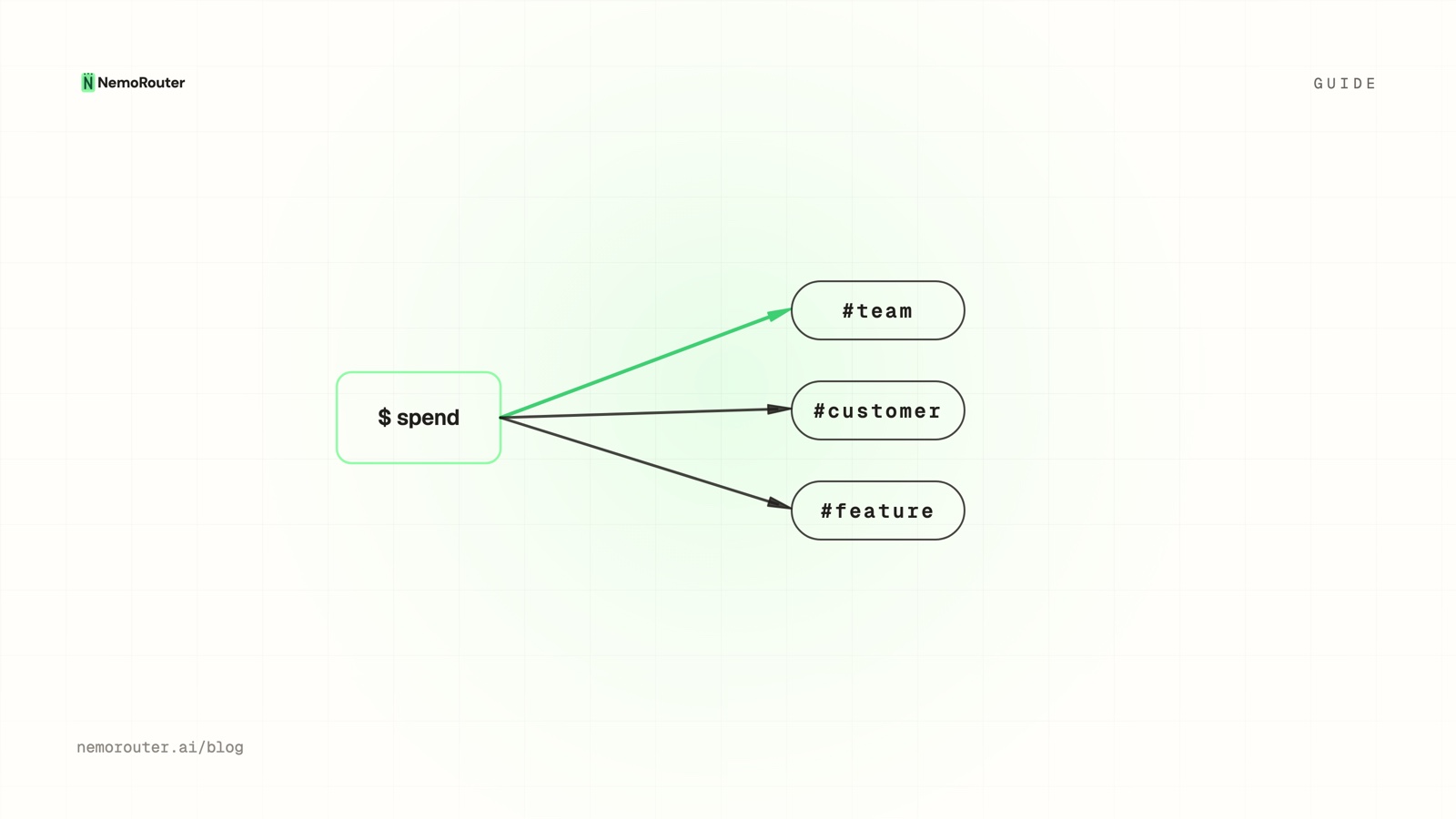
"The AI bill went up" is useless without attribution. Here is how request tags let you slice LLM spend by team, customer, feature, and environment on a gateway — no per-call bookkeeping in your app.

An LLM gateway is a single endpoint that routes to every model provider while handling keys, cost, rate limits, and safety. Here is what it does, when you need one, and how to evaluate it.

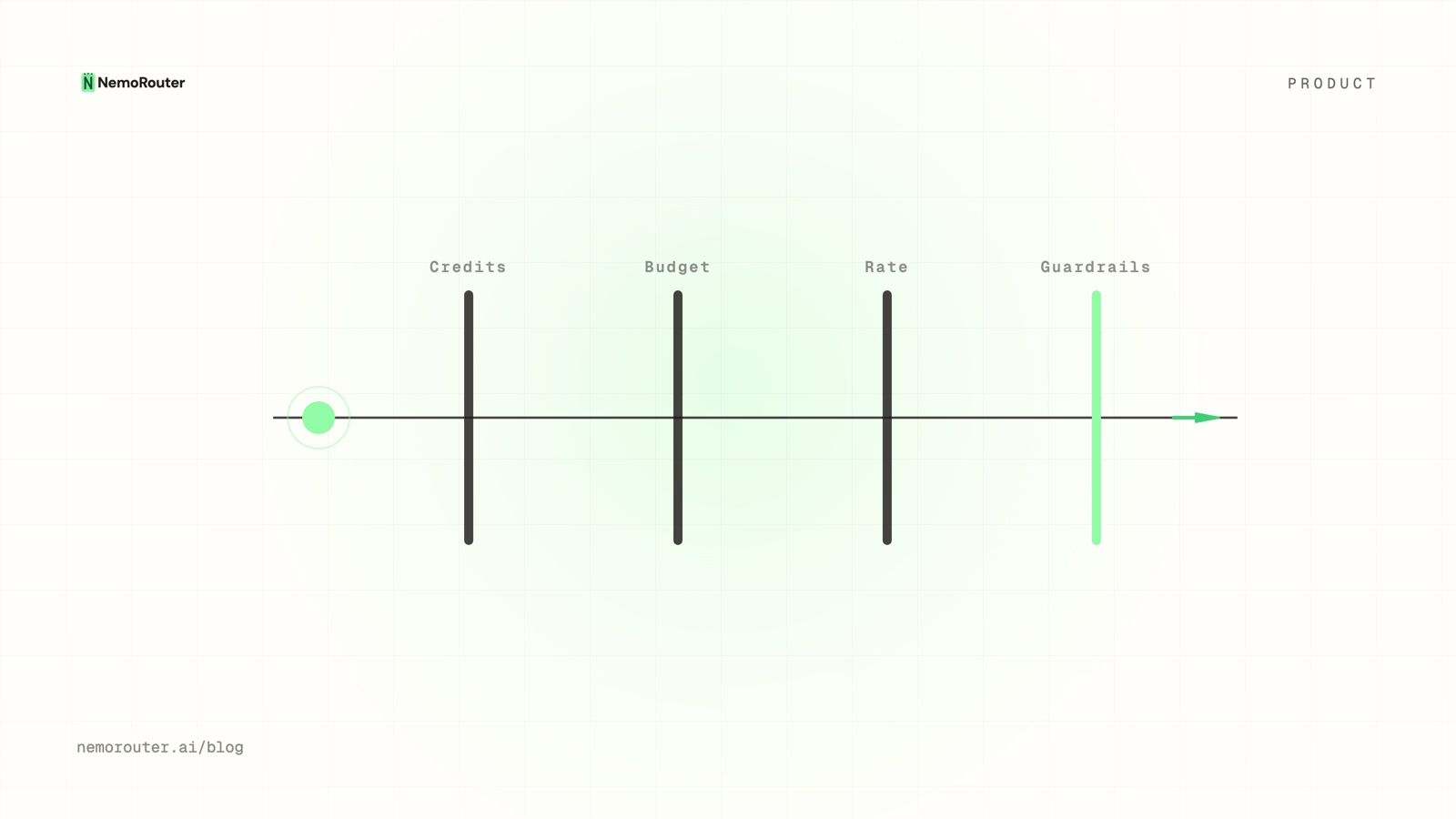
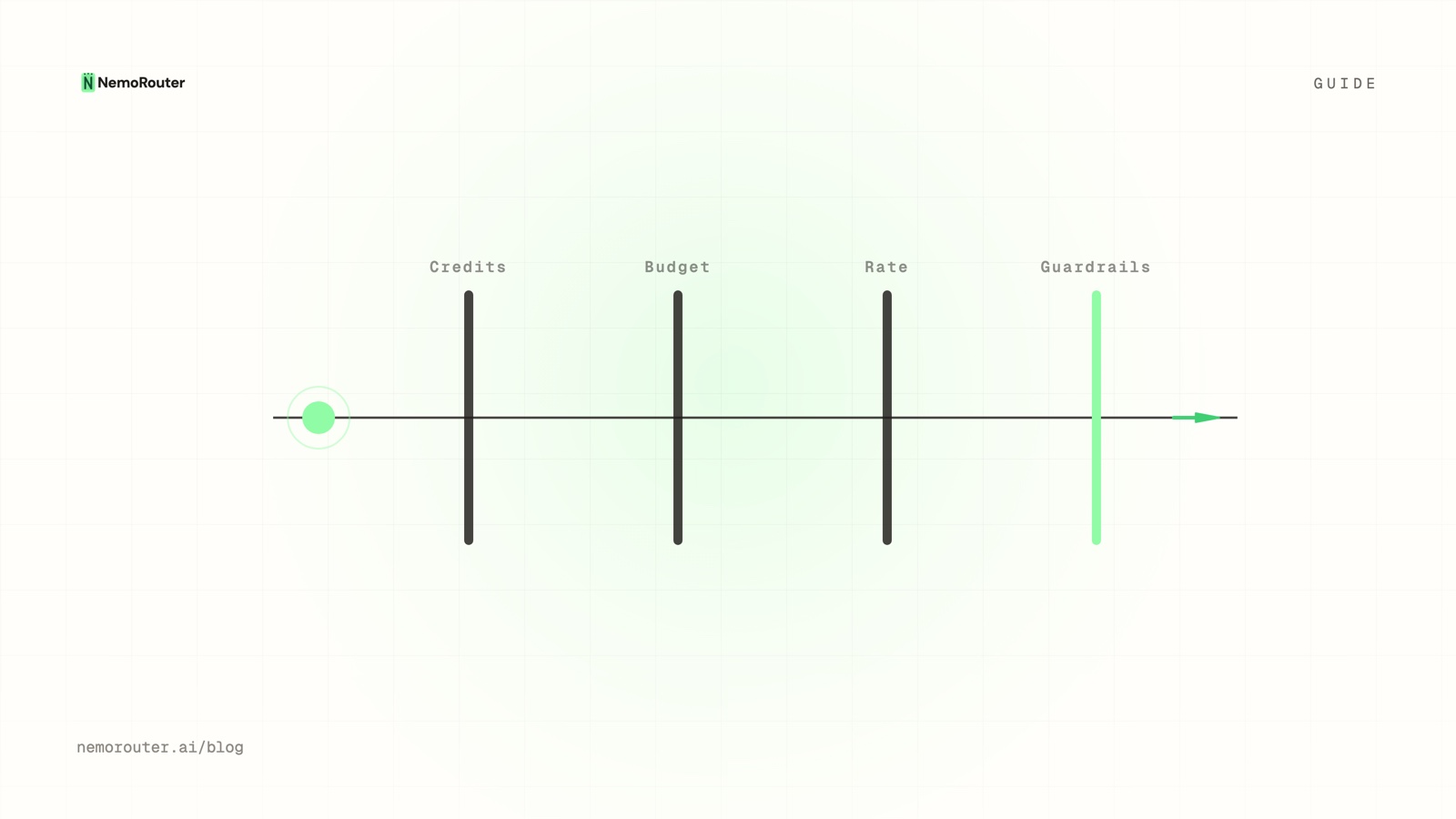
Before an LLM call leaves the gateway it clears four independent limits: credit balance, budget cap, rate limit, and guardrails. Here is what each one checks and why they are separate.

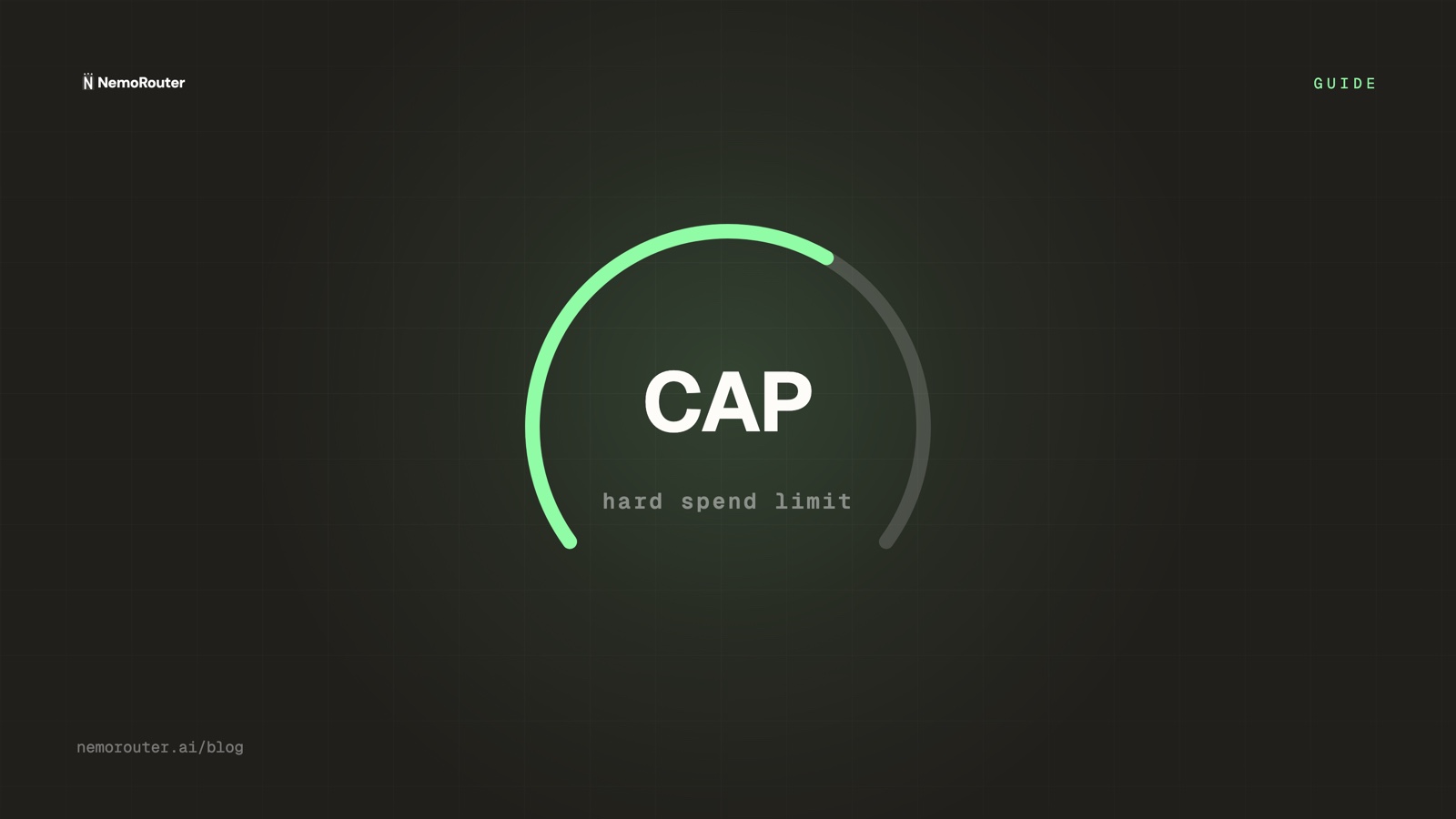
A runaway agent or leaked key can burn thousands in hours. Here is how hard budget caps, soft alerts, and reserve-and-settle stop the bleeding on an LLM gateway — before the invoice arrives.

Most gateways quietly take a cut of every token. NemoRouter charges a platform fee on top at purchase and gives you 100% of your credits. Here is why that pricing model is more honest — and cheaper at scale.

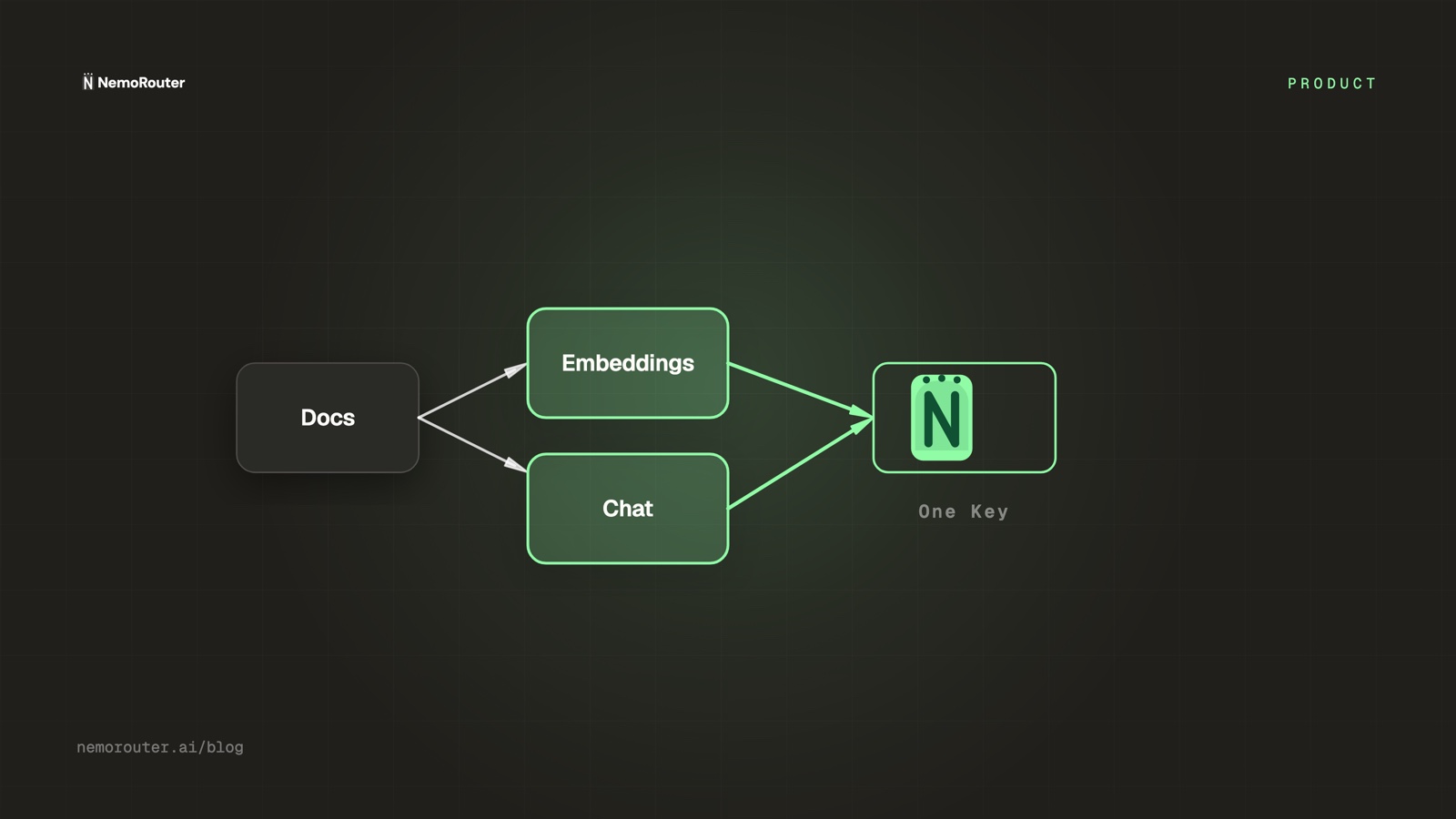
RAG apps call two model types — embeddings and chat — often from different providers. Here is how a single gateway unifies both behind one key, with shared cost tracking, budgets, and fallback.

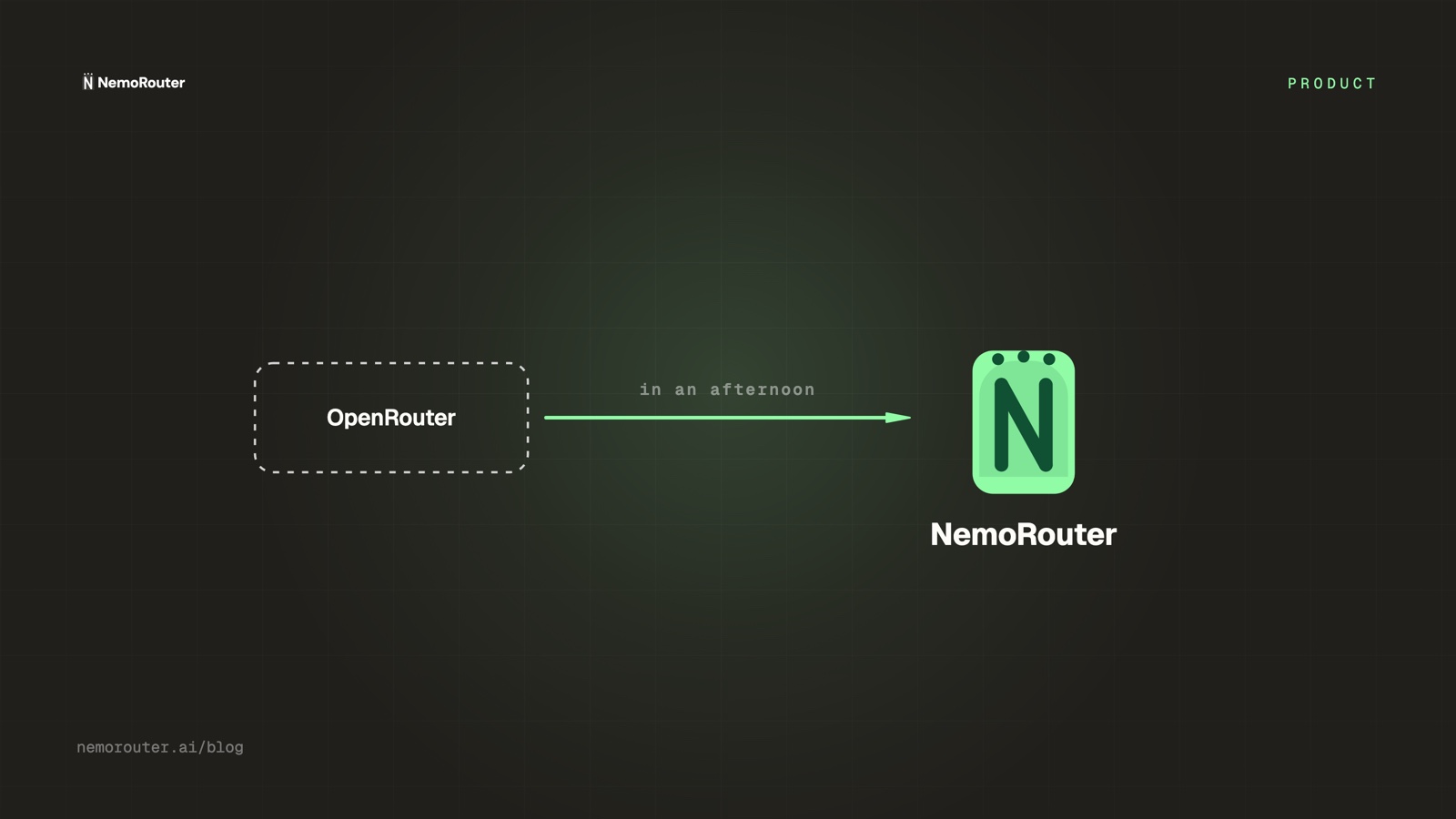
Switching LLM gateways sounds like a project. It's usually a base-URL change. Here is how to migrate from OpenRouter to NemoRouter without rewriting your app — and what you gain by doing it.

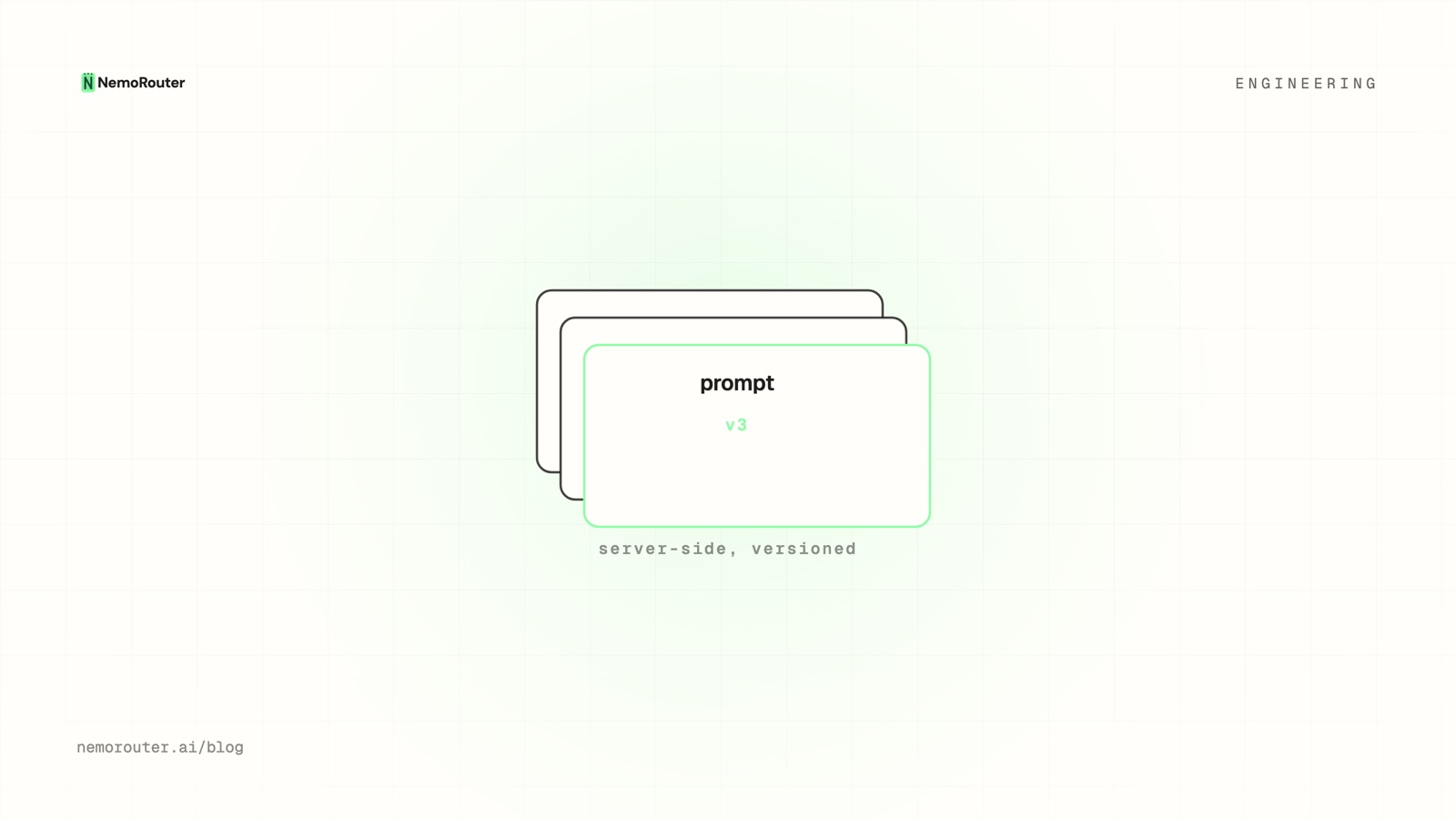
Hardcoded prompts scattered across services are impossible to change safely. Here is how server-side prompt templates with versioning let you edit, roll back, and A/B prompts without a redeploy.

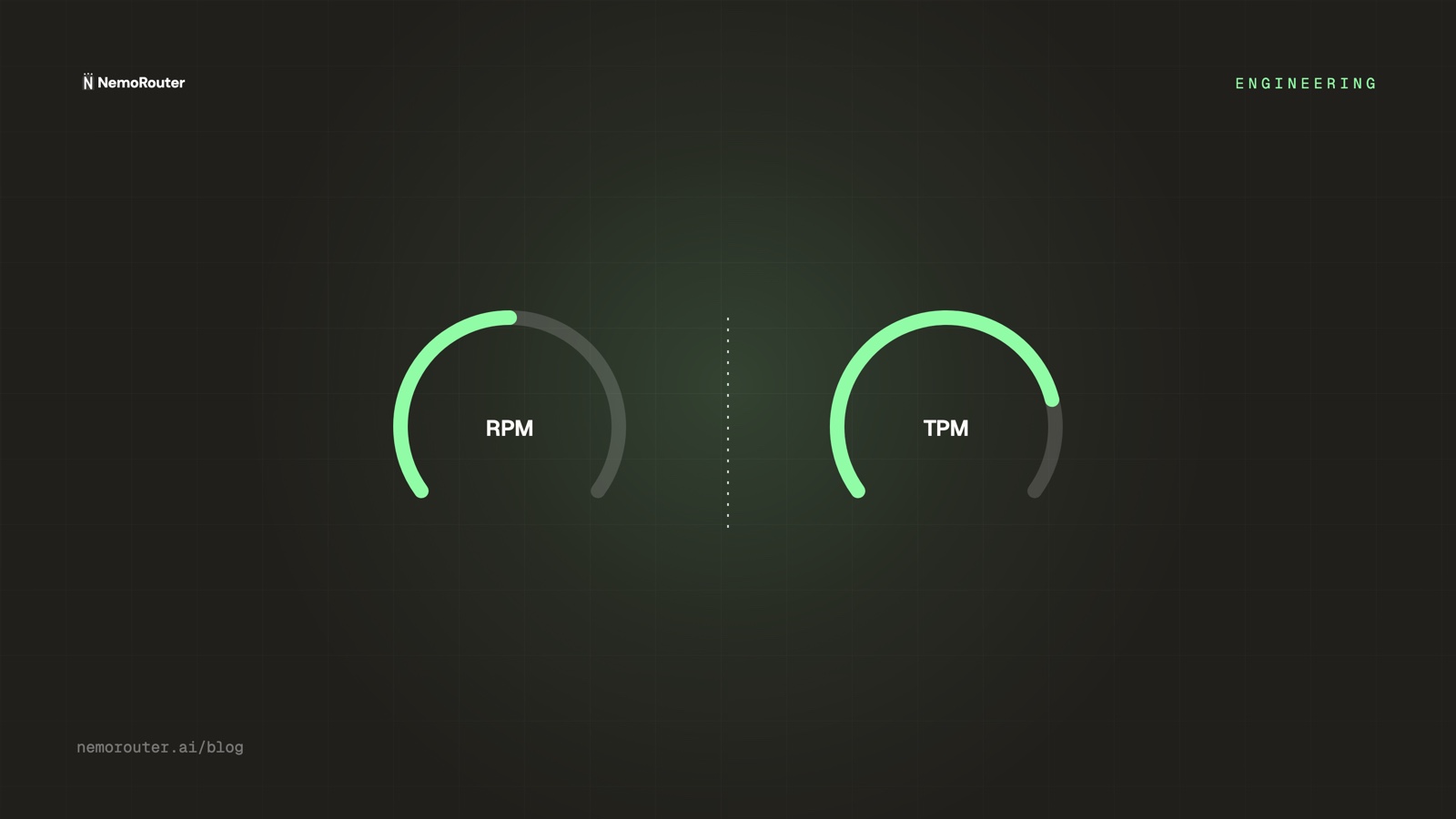
Rate limits cap velocity, not total spend — and they're a security boundary, not a knob. Here is how RPM/TPM limits work per key, team, and org, and why the caller can never override them.

Not every request needs your most expensive model. Here is a decision framework for routing LLM traffic by cost and quality — which tasks to send cheap, which to send premium, and how to prove the split works.

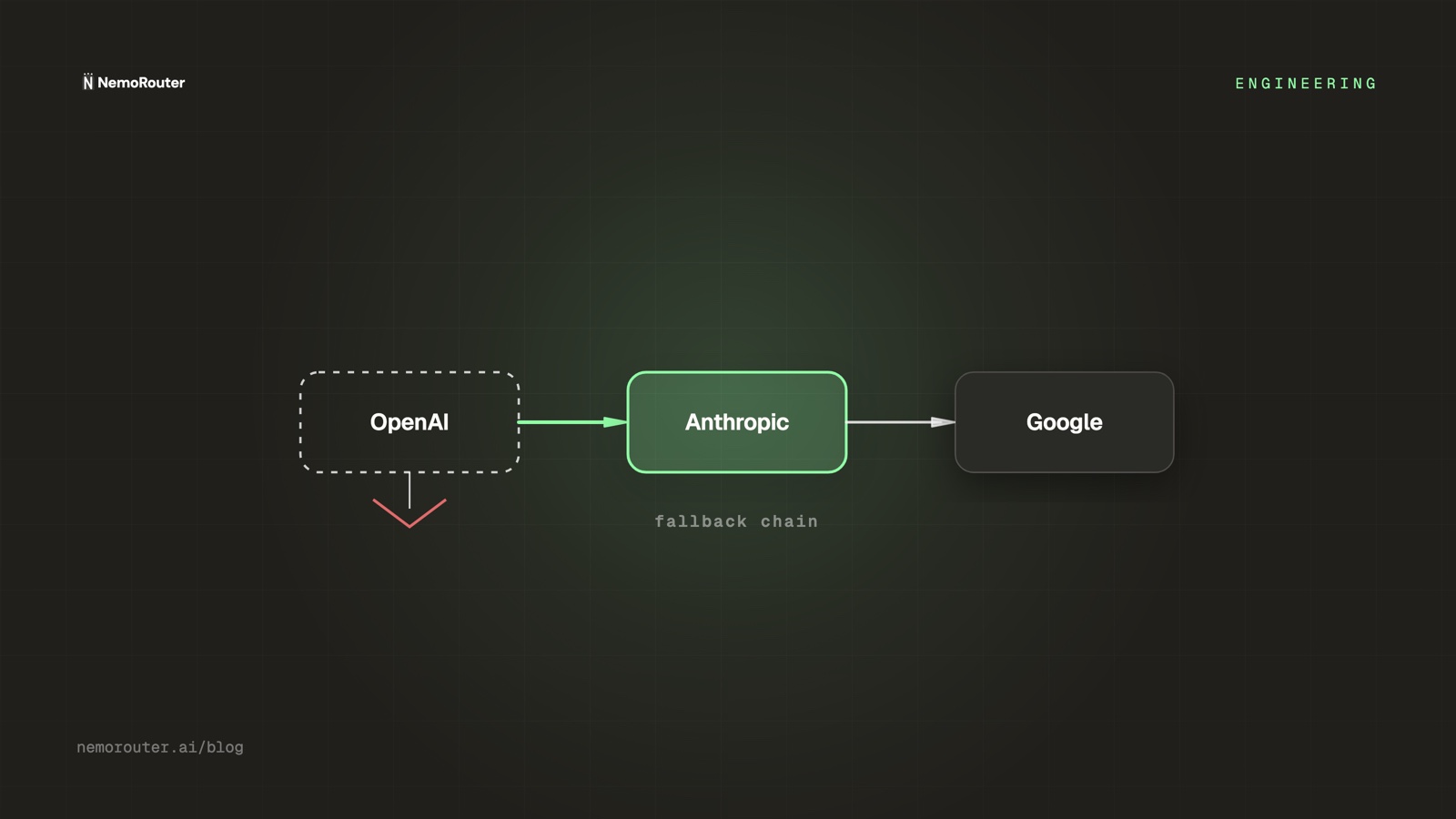
When a provider 5xxs or rate-limits you, your app shouldn't go down with it. Here is how fallback chains on an LLM gateway reroute to a healthy provider mid-request — without changing your code.

Head-to-head: NemoRouter vs Langfuse. A self-hostable observability + prompt + evals specialist vs a hosted LLM gateway that bundles observability, routing, and governance — every feature free on every tier. 4% PAYG, 0% on Tier 3 annual prepay. 2,000+ models behind one API key.

Vendor-neutral buyer's-guide decision tree across the three durable LLM routing-intelligence shapes — benchmark-anchored (Unify-style), ML-classifier (NotDiamond-style), and operator-controlled (NemoRouter-style). Three questions, one shape, one product. Pick the failure mode your team is best equipped to own.

Head-to-head: NemoRouter vs TrueFoundry AI Gateway. Guardrails, A/B tests, prompt management, evals, and per-team budgets — free on every tier, on an AI-native LLM gateway with 2,000+ models behind one API key. 4% PAYG, 0% on Tier 3 annual prepay. Focused LLM governance depth, not an AI Gateway bundled inside a broader MLOps platform.

Head-to-head: NemoRouter vs NotDiamond. Guardrails, A/B tests, prompt management, evals, and per-team budgets — free on every tier, on an AI-native LLM gateway with operator-controlled routing across 2,000+ models behind one API key. 4% PAYG, 0% on Tier 3 annual prepay. Governance-first depth, not an opaque ML-classifier routing layer.

Head-to-head: NemoRouter vs Kong AI Gateway. Guardrails, A/B tests, prompt management, evals, and per-team budgets — free on every tier, on an AI-native LLM gateway built around 2,000+ models behind one API key. 4% PAYG, 0% on Tier 3 annual prepay. Focused-LLM depth, not enterprise API-gateway plugin extension.

Head-to-head: NemoRouter vs Unify AI. Guardrails, A/B tests, prompt management, evals, and per-team budgets — free on every tier, on a focused LLM gateway built around 2,000+ models behind one API key. 4% PAYG, 0% on Tier 3 annual prepay. Operator-controlled routing, not benchmark-driven arbitration.

Head-to-head: NemoRouter vs Eden AI. Guardrails, A/B tests, prompt management, evals, and per-team budgets — free on every tier, on a focused LLM gateway built around 2,000+ models behind one API key. 4% PAYG, 0% on Tier 3 annual prepay. One base-URL switch on the LLM side.

Head-to-head: NemoRouter vs Cloudflare AI Gateway. Guardrails, A/B tests, prompt management, evals, and per-team budgets — free on every tier, and the same endpoint works from Cloudflare, Vercel, AWS, GCP, or your own infra. 4% PAYG, 0% on Tier 3 annual prepay. One base-URL switch.

Head-to-head: NemoRouter vs Vercel AI Gateway. Guardrails, A/B tests, prompt management, evals, and per-team budgets — free on every tier, and the same endpoint works from Vercel, Cloudflare, AWS, GCP, or your own infra. 4% PAYG, 0% on Tier 3 annual prepay. One base-URL switch.
Head-to-head: NemoRouter vs Helicone. Guardrails, evals, A/B tests, prompt management, and per-team budgets — free on every tier, no Pro or Enterprise upgrade. 4% PAYG, 0% on Tier 3 annual prepay. One base-URL switch.

Head-to-head: NemoRouter vs Portkey. Guardrails, A/B tests, prompt management, evals, and per-team budgets — free on every tier. 4% PAYG, 0% on Tier 3 annual prepay. One base-URL switch.

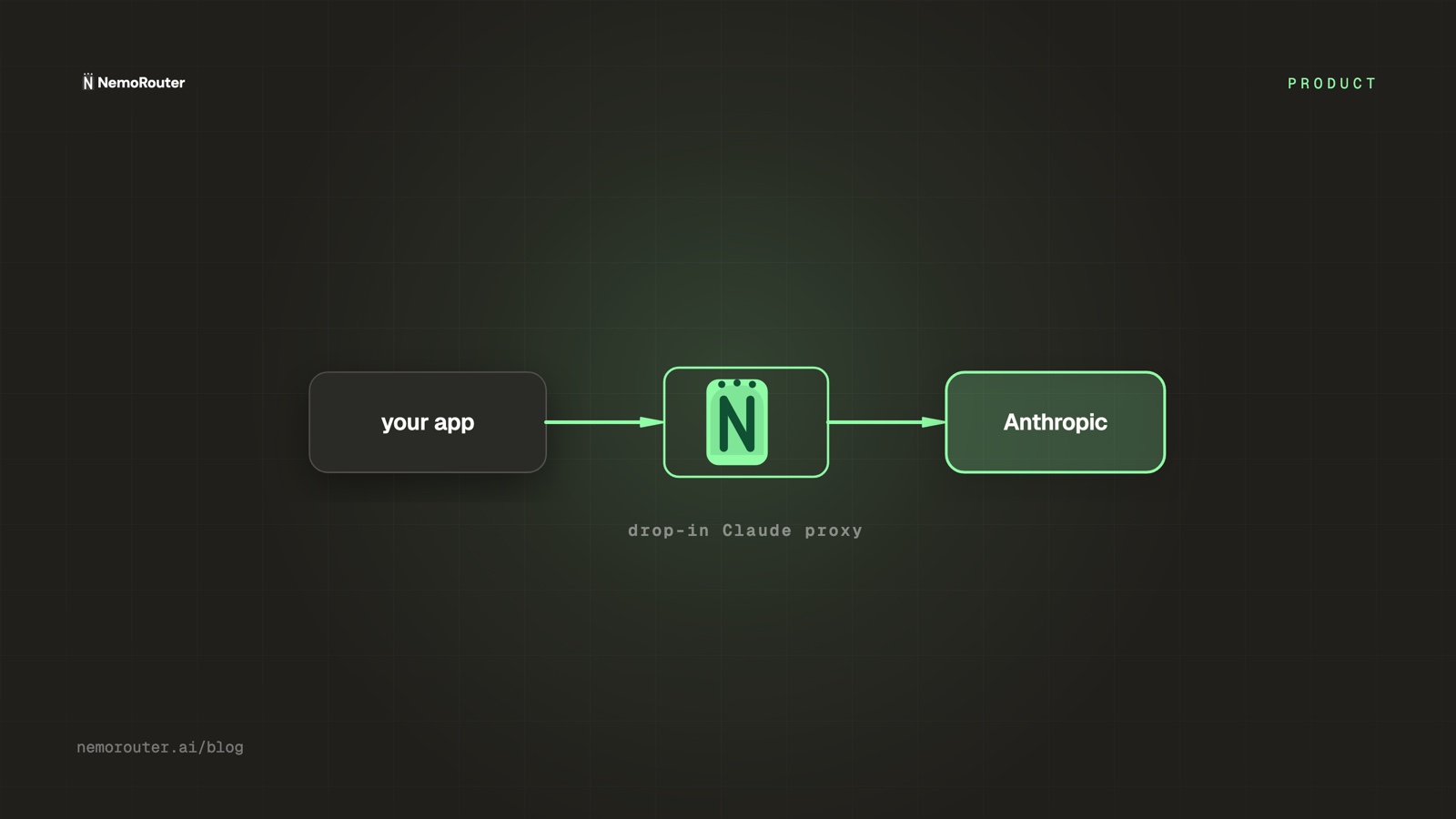
Why teams that scale Claude usage end up writing a proxy layer for rate-limit overflow, multi-team cost tracking, guardrails, and OpenAI-compatibility — and how to skip that work with one base-URL swap. 4% PAYG, 0% on Tier 3 annual.

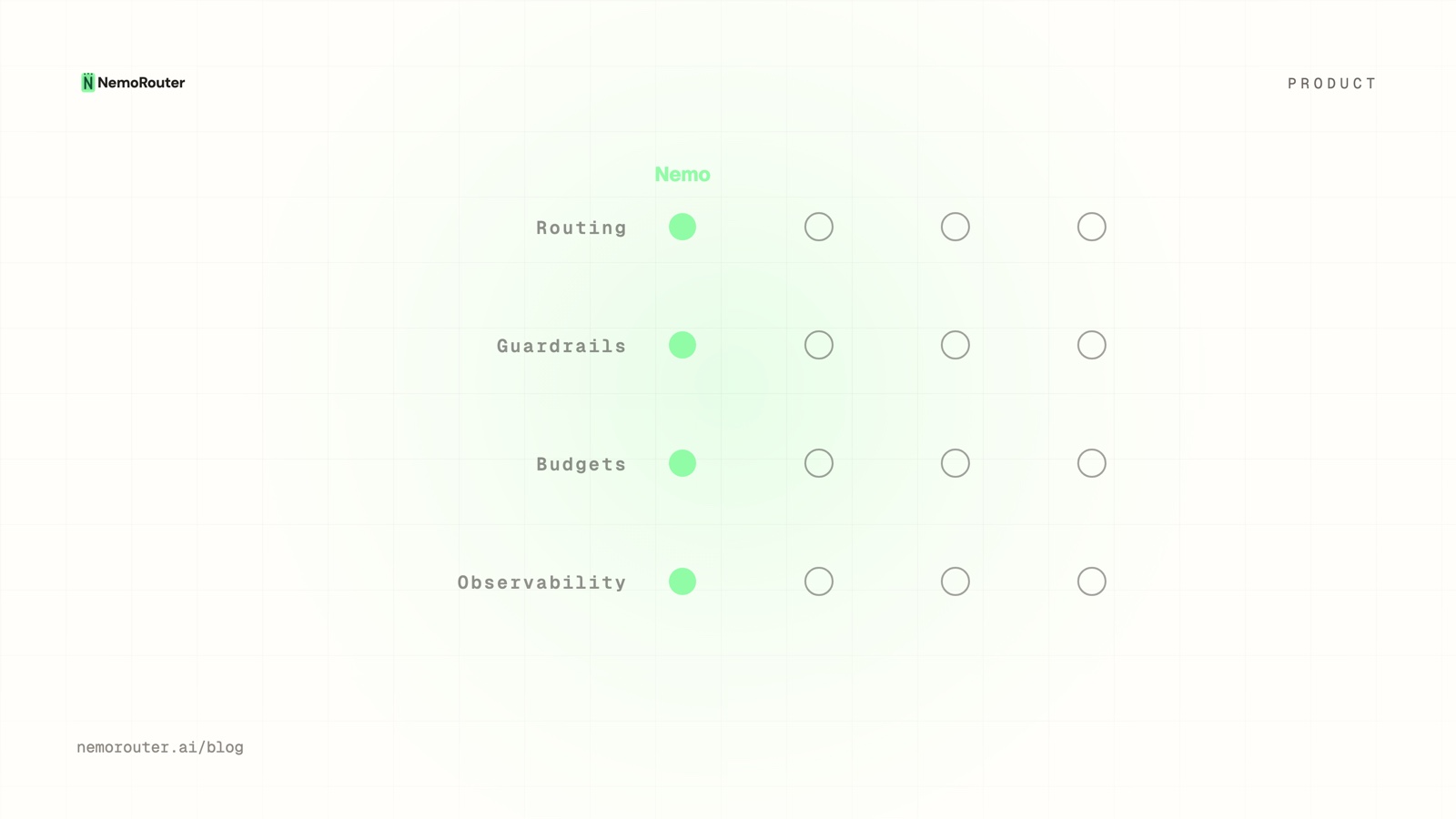
Eight axes that actually matter when picking an LLM gateway in 2026. Shortlist matrix across OpenRouter, Portkey, Helicone, NemoRouter. Decision tree by buyer profile, 90-minute evaluation.

Head-to-head comparison: NemoRouter vs OpenRouter, Portkey, Helicone. Guardrails, A/B tests, prompt management, evals, budgets — free on every tier. 4% PAYG, 0% on Tier 3 annual prepay. One base-URL switch.

Why a managed LLM gateway is the right foundation for agentic AI systems — and how NemoRouter's virtual keys, budgets, guardrails, and multi-provider routing solve the specific challenges of autonomous agent infrastructure.