The standard SaaS pricing move is to take your best features — SSO, audit logs, the security stuff — and lock them behind the "Enterprise" tier. It works, in the sense that it extracts more money. It also means the customers who can least afford the upgrade run without the controls they most need. We made the opposite bet: every feature is unlocked on every tier, and we differentiate on a platform fee instead. This post is the reasoning, including the part where it costs us something.
What we don't gate
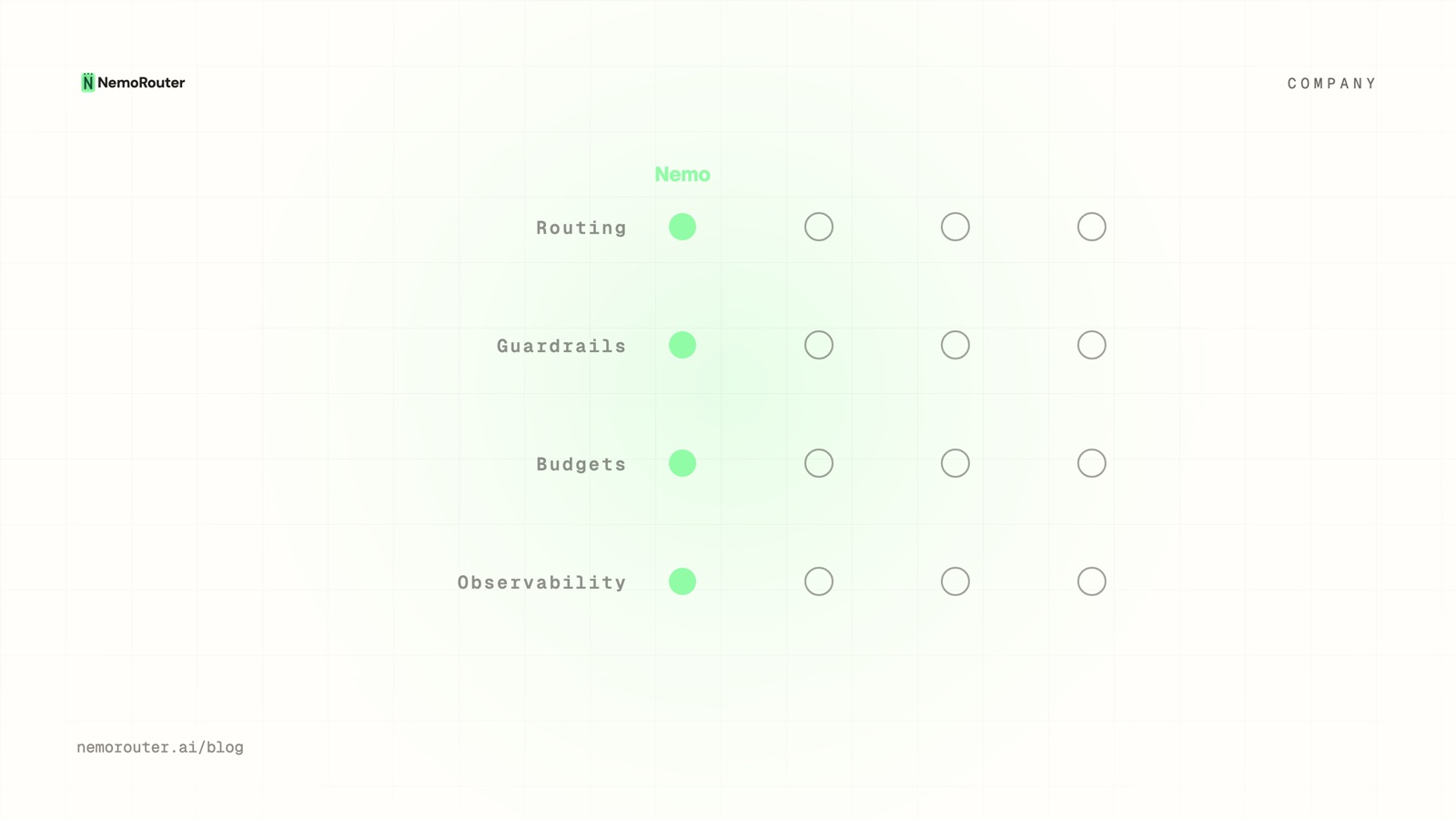
On NemoRouter, the plan you're on never changes what you can do. Guardrails, budgets, RBAC, audit trails, observability, fallback, A/B testing, prompt templates — all of it works on the entry tier exactly as it works on the top tier:
Credits     every feature ✓   platform fee 4%   lower RPM/TPM
Pro         every feature ✓   platform fee 0%   higher RPM/TPM
Enterprise  every feature ✓   platform fee 0%   custom RPM/TPM
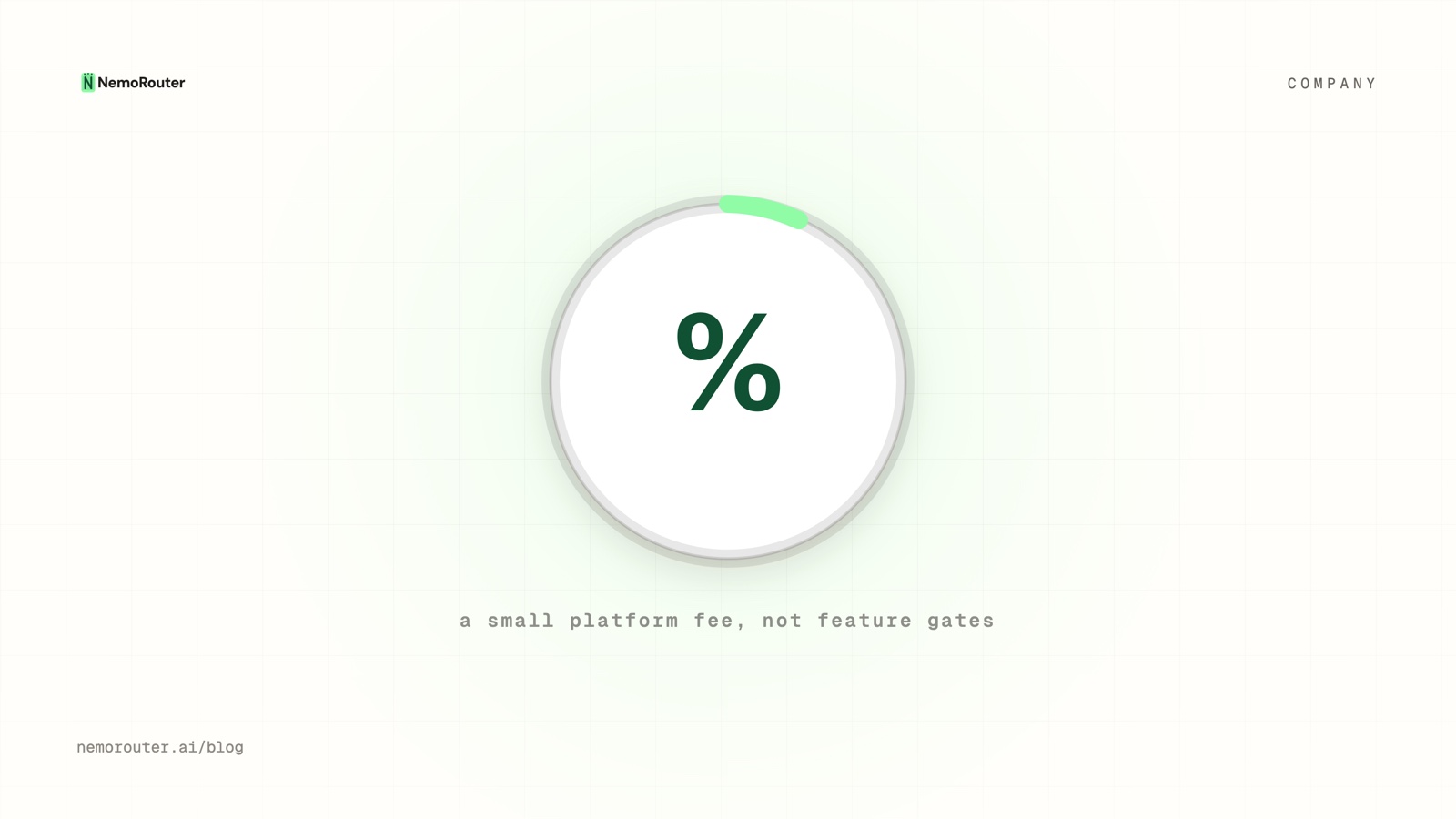
The plans move two things only: the platform fee (charged on top at purchase, never skimmed per call) and rate limits (RPM/TPM). Capabilities are constant. There is no "upgrade to unlock."
Why gating safety features is backwards
The strongest version of the argument is about the security features specifically. PII redaction, audit trails, spend caps — these are exactly what a small or early team needs most, because they have the least margin for a leak or a runaway bill. Gating them behind Enterprise means the people most exposed to the risk are the ones priced out of the protection.
Safety you have to upgrade to buy is safety most teams won't have
A feature gate on a guardrail isn't a pricing decision — it's a decision that smaller customers run unprotected. We'd rather every account have PII redaction and audit logging on day one and compete on fee, than book more revenue by withholding the controls that prevent incidents.
Why fee-not-features is a better bet for us too
This isn't pure altruism — the incentives line up better:
- We grow when you grow. A platform fee scales with the value you get from the gateway, not with how many features we can withhold. Our interest is your usage going up, which means our interest is the product being good.
- No artificial upgrade friction. Sales conversations aren't "pay more to turn on the thing you need." They're "you already have everything; here's the fee that fits your volume." (The mechanics: markup-free credits.)
- Simpler product. No entitlement matrix, no per-tier feature flags, no "is this gated" logic threaded through the UI. Every code path is the same for everyone, which is less to build and less to break.
What it costs us (honestly)
The honest part: feature gating works as a revenue tactic, and not doing it leaves money on the table in the short run. A competitor can book a fat Enterprise contract by bundling SSO and audit logs into the top tier; we can't, because we already gave those away. We're betting that the long-run trade — trust, lower friction, customers who grow with us — beats the short-run extraction. That's a real bet, not a free lunch, and we're making it on purpose.
The takeaway
Pricing encodes who you're aligned with. Gating features — especially safety features — means your incentive is to withhold, and the customers most exposed to risk are the ones who pay to be protected. Unlocking everything and competing on a platform fee means our incentive is your usage growing, which means our incentive is the product being genuinely good. It costs us some short-run revenue and we think it's the right bet anyway.